
In today’s digital world, ranking higher on Google has become one of the most important goals for businesses looking to grow online. When customers search for products or services, they usually click on websites that appear on the first page of Google. If your website is not ranking well, you may be losing potential customers to competitors. This is where Search Engine Optimization (SEO) plays a major role.
SEO is the process of improving a website so that it appears higher in Google search results. A well-optimized website can attract more visitors, build trust, and generate quality leads without relying completely on paid advertising. The higher your website ranks, the greater the chances of getting clicks, customers, and sales.
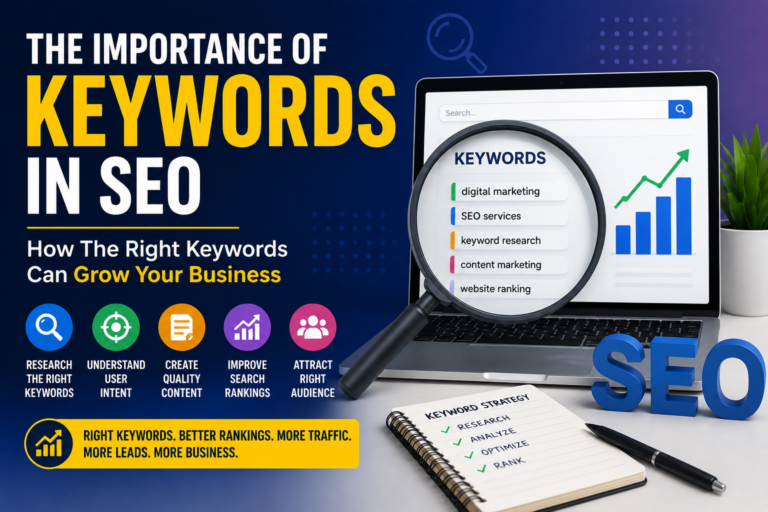
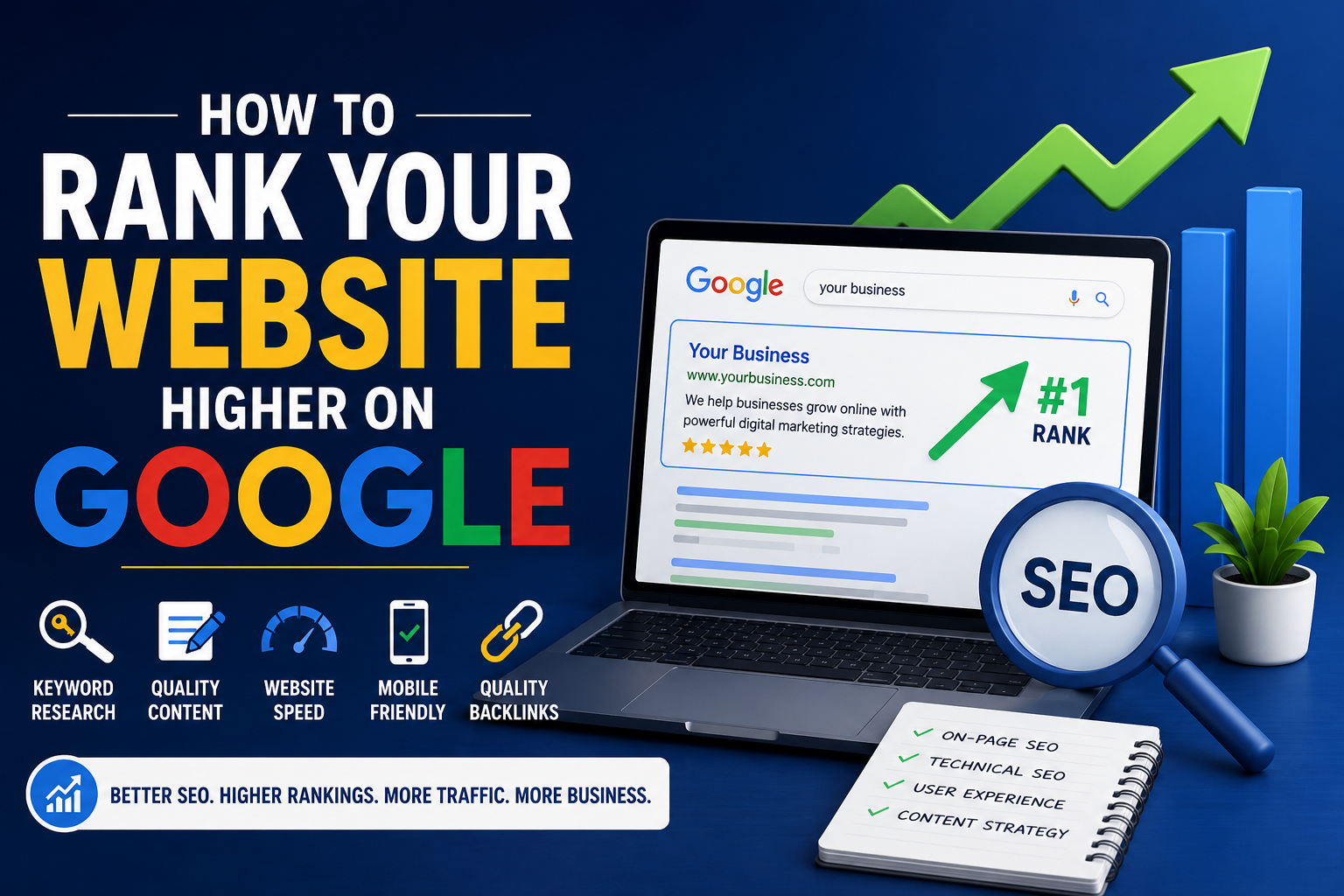
One of the most important factors in Google ranking is using the right keywords. Keywords are the words or phrases people type into Google when searching for information. Businesses should understand what their target audience is searching for and naturally include those keywords in website content, headings, blog posts, and page titles. However, overusing keywords can negatively affect rankings, so balance is important.
Another important factor is creating high-quality content. Google prefers websites that provide useful, relevant, and valuable information to users. Businesses that regularly publish blogs, guides, FAQs, and educational content often perform better in search results. Content should focus on solving customer problems and answering common questions.
Website speed and mobile-friendliness also play a major role in SEO. A slow website can frustrate visitors and increase bounce rates, which may hurt rankings. Since most users browse on mobile phones, businesses must ensure their website is responsive and easy to navigate on all devices.
Building trust through backlinks is another key SEO strategy. Backlinks happen when other websites link to your content, signaling to Google that your website is trustworthy and valuable. High-quality backlinks from relevant websites can significantly improve rankings.
Additionally, optimizing page titles, meta descriptions, images, and website structure helps search engines understand your content better. Technical SEO may seem complex, but even simple improvements can make a big difference over time.
SEO is not a one-time task; it requires patience and consistency. Results may take weeks or even months, but the long-term benefits are worth the effort. Unlike paid advertising, SEO can continue bringing organic traffic without ongoing advertising costs.
In conclusion, ranking higher on Google requires a combination of the right keywords, valuable content, website optimization, and consistent effort. Businesses that invest in SEO can build a stronger online presence, attract more customers, and achieve sustainable growth in an increasingly competitive digital market.