

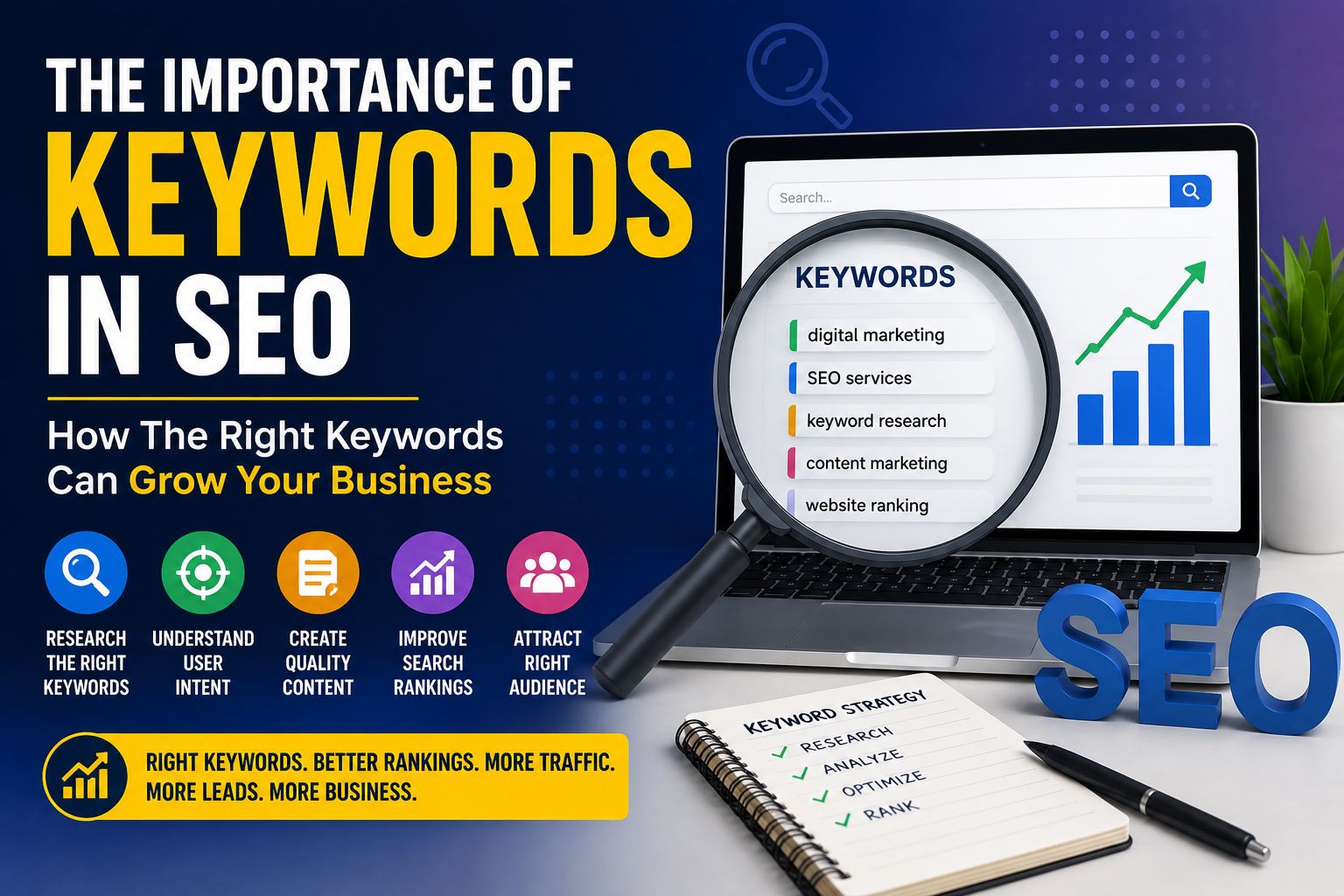
The Importance of Keywords in SEO: How The Right Keywords Can Grow Your Business
In the world of Search Engine Optimization (SEO), keywords play one of the most important roles in helping websites rank higher on Google. Whenever people search for products, services, or information online, they type words or phrases into search engines. These words are known as keywords. Choosing and using the right keywords can help businesses attract more visitors, increase visibility, and generate quality leads.
Keywords are important because they help search engines understand what your website or content is about. For example, if someone searches for “digital marketing services” and your website contains relevant content using that keyword naturally, Google is more likely to show your website in search results. Without proper keyword optimization, even a well-designed website may struggle to attract traffic.
There are different types of keywords businesses should understand. Short-tail keywords are broad search terms, such as “SEO” or “digital marketing.” These usually have high search volume but strong competition. On the other hand, long-tail keywords are more specific phrases, such as “best digital marketing agency for small businesses” or “how to rank website higher on Google.” Long-tail keywords often bring better-quality traffic because users searching these phrases usually know what they want.
Keyword research is a crucial step in any SEO strategy. Businesses should identify what their target audience is searching for and focus on keywords that match customer intent. Tools like Google Keyword Planner, Ubersuggest, and SEMrush can help businesses find high-performing keywords related to their industry. Choosing keywords with a good balance of search volume and low competition can improve ranking opportunities.
However, simply adding keywords everywhere is not enough. Google values natural, user-friendly content. Keywords should be placed strategically in blog titles, headings, meta descriptions, URLs, and website content without overusing them. Keyword stuffing, or forcing too many keywords into content, can negatively affect rankings and reduce readability.
Content quality also matters when using keywords. Businesses should create useful, engaging, and informative content that answers customer questions and solves problems. Valuable content combined with proper keyword placement helps improve both rankings and user experience.
Another important factor is keeping up with changing search trends. Customer behavior evolves, and businesses should regularly update their keyword strategy to stay relevant and competitive in search results.
In conclusion, keywords are the foundation of successful SEO. They help businesses connect with the right audience, improve search rankings, and drive organic traffic to websites. By researching, selecting, and using the right keywords strategically, businesses can strengthen their online presence and achieve long-term digital growth.